Whitepaper
Customer Centricity: Beyond the Slogans
The Digital Evolution: Over the past decade, consumer expectations have been irreversibly reshaped by on-demand digital services. Customer tolerance for operational friction has collapsed, and brand advocacy is forged in real-time.
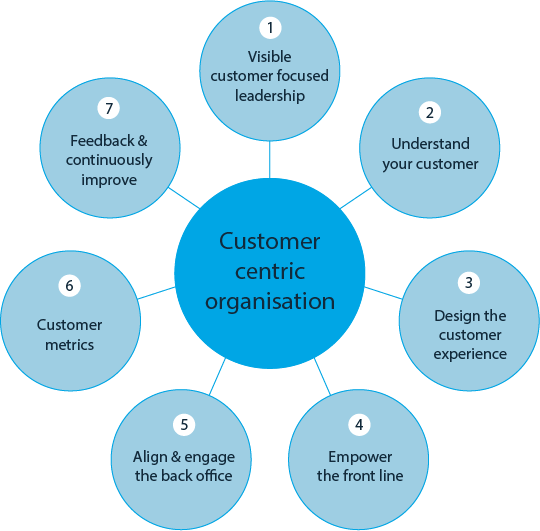
The Fallacy of Lip Service: Many corporate boards declare themselves "customer-focused" while maintaining product-centric silos, uncoordinated digital/retail handoffs, and misaligned back-office KPIs. True customer centricity requires four structural action steps:
- Assess Maturity: Benchmark existing customer centricity across every internal division.
- Document the Journey: Establish unified, end-to-end customer journey maps across all channels.
- Deep-Dive High-Impact Touchpoints: Redesign the critical moments of truth that disproportionately govern customer perception.
- Execute Dual Change Agendas: Pair immediate process quick-wins with fundamental structural alignment.
Framework Briefing
Culture Change: The Cultural Web in Practice
Culture as a Strategic Variable: Referencing McKinsey’s definition of corporate culture as "the way we do things around here", culture cannot be altered via speeches or posters. It must be addressed as an aligned operational variable utilizing the Johnson & Scholes Cultural Web framework:
- Organisational Structure: Formal and informal networks that dictate speed of decision-making.
- Control Systems: The KPIs, financial metrics, and reward systems that reinforce behavior.
- Power Structures: Core executive influencers and decision-making styles.
- Routines & Rituals: Daily habits that either delight customers or protect internal comfort.
- Stories & Myths: The shared lore that shapes employee expectations.
- Symbols: Physical spaces, status markers, and executive role-modelling.
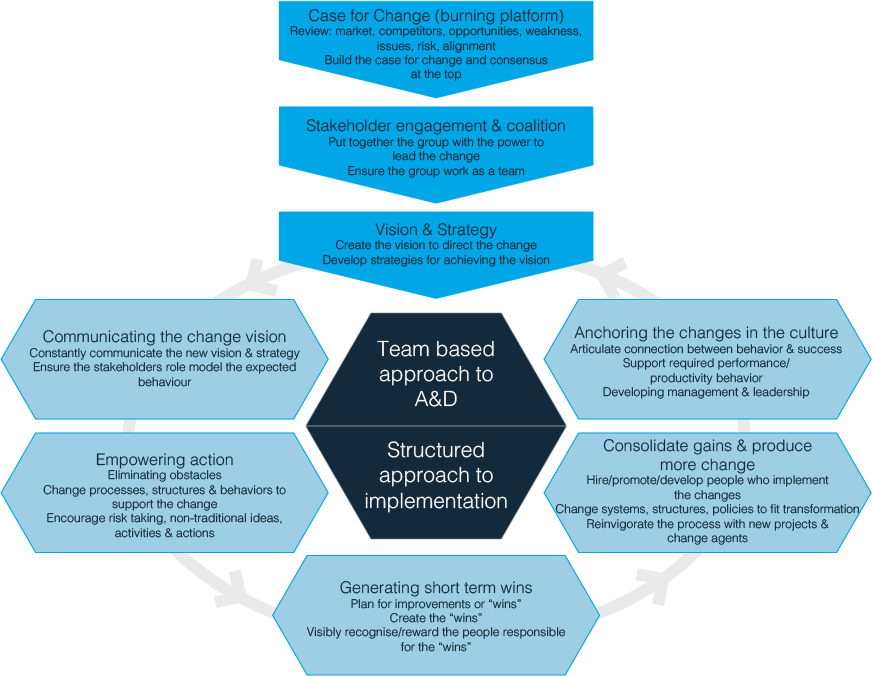
5-Stage Transformation Roadmap: Understand Current Norms → Critique Current Value Chain → Co-Design with Change Teams → Plan Transition Gates → Visible Leadership Implementation.
CEO Diagnostic
Operational Focus: Five Critical CEO Questions
Before committing capital to transformation, executive leadership must confront five candid questions:
- Are you investing sufficient resources into your highest-margin, core customer segments?
- Have you eliminated unprofitable product lines and non-value-adding operational complexities?
- Are your back-office units structured around external customer outcomes rather than departmental ease?
- Do you have transparent, unvarnished visibility into the cost-to-serve for each product and channel?
- Is executive bandwidth consumed by firefighting operational breakdowns rather than strategic growth?